
Mišo Ormandík
Refugees
- Fechas
- 8/6 – 2/7/2016
- Lugar
- DOT. Galería
- Comisario
- Mgr. Zuzana Danková
- Artistas
- Mišo Ormandík
StartFragment
Mišo Ormoš - Refugees
Curadora: Mgr. Zuzana Danková
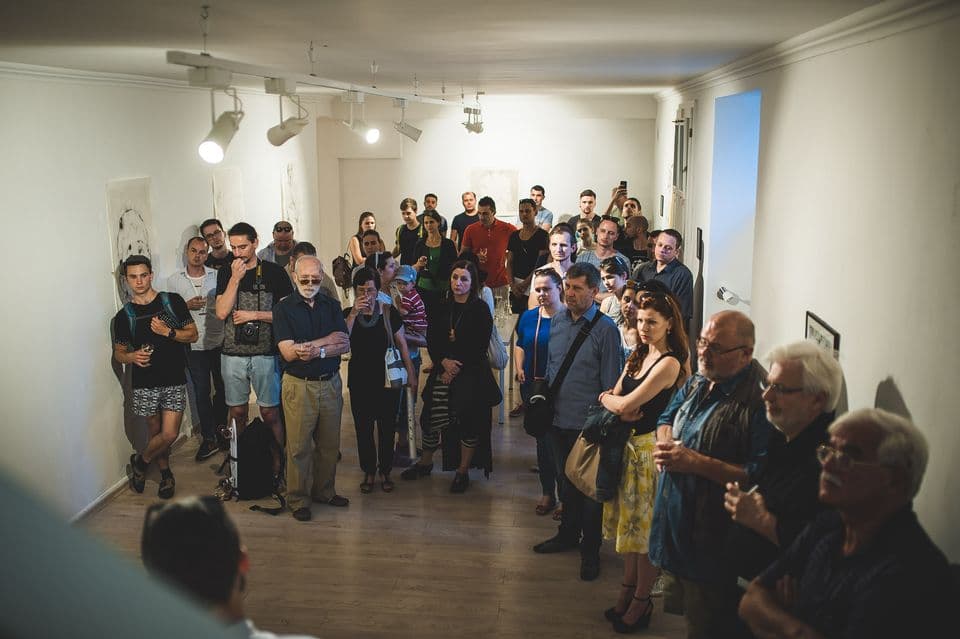
Inauguración: 8.6.2016, 18:00
DOT. Lazaretská 13, Bratislava
Duración: 8.6. - 2.7. 2016
La obra de Ormoš se dirige de forma directa a los temas de lo efímero, la inestabilidad, la transitoriedad y también el existencialismo, temas que el autor aborda de manera programática y reiterada, a menudo en un gran número de obras (por ejemplo, las series Pope y Blues).
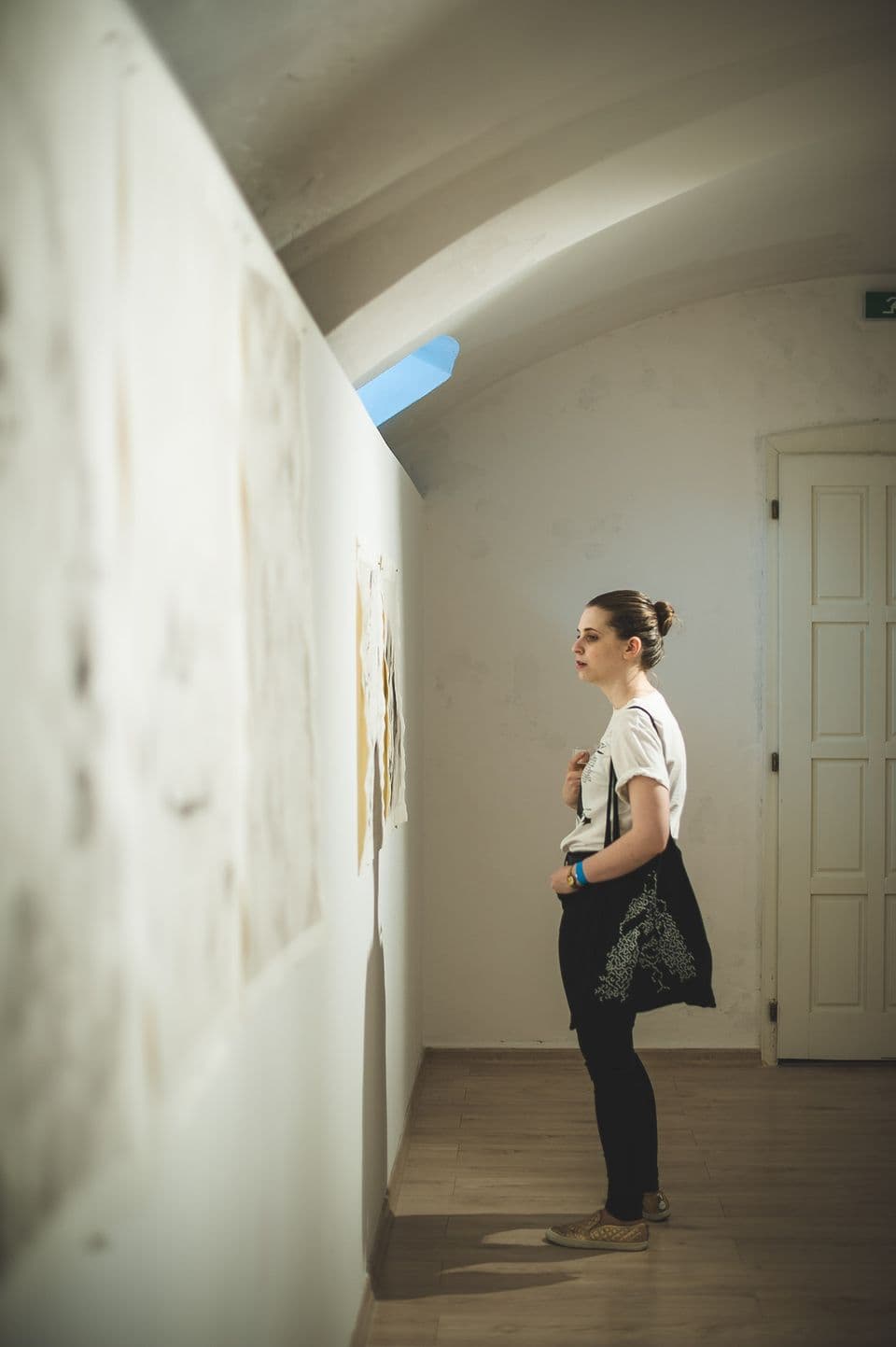
En su obra actual (con su característica coloración sombría en blanco y negro y su atención al retrato y la figura), Ormoš responde a la situación actual del mundo: el tema de los refugiados está, desde finales del año pasado, extraordinariamente expuesto, mediatizado, interpretado de diversas maneras y a menudo presentado de forma deformada al lector o espectador eslovaco. El aluvión de noticias tampoco ha dejado al margen al autor, que, como receptor, ya no es capaz de asimilar tal cantidad de información y empieza a mostrarse, al igual que muchos otros, apático o resistente ante este tema delicado.
Ormoš observa nuestra frecuente tendencia a simpatizar con un solo tipo de noticias, fotografías u opiniones, en lugar de analizar y evaluar la gran cantidad de informaciones diversas disponibles, así como la tendencia a generalizar y la incapacidad de fijar la atención en los detalles y lo concreto. A partir de estas observaciones, el autor elige un procedimiento sencillo, un gesto artístico, y de entre la multitud de fotografías de prensa, que a menudo muestran escenas de masas,
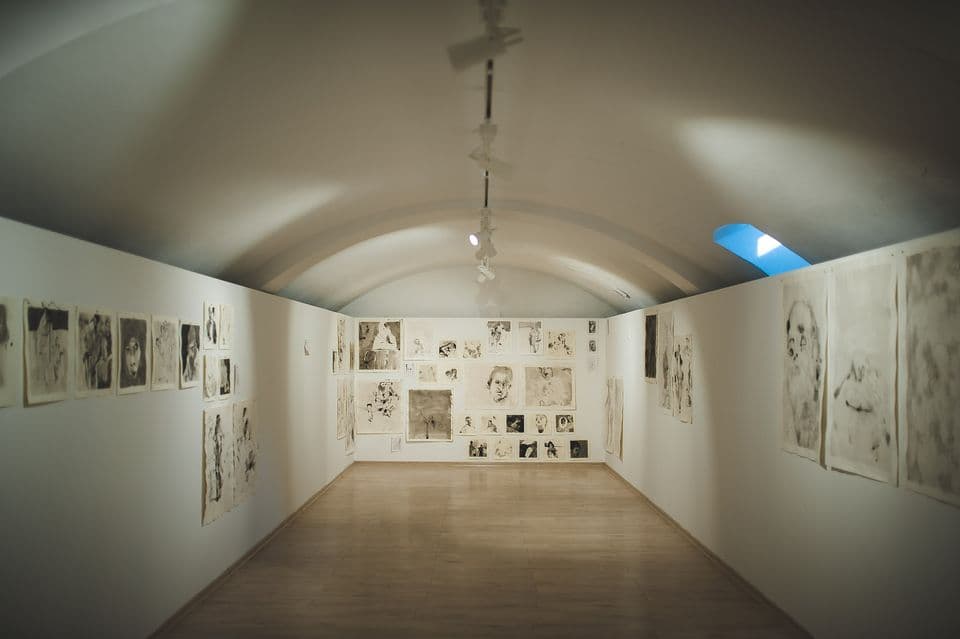
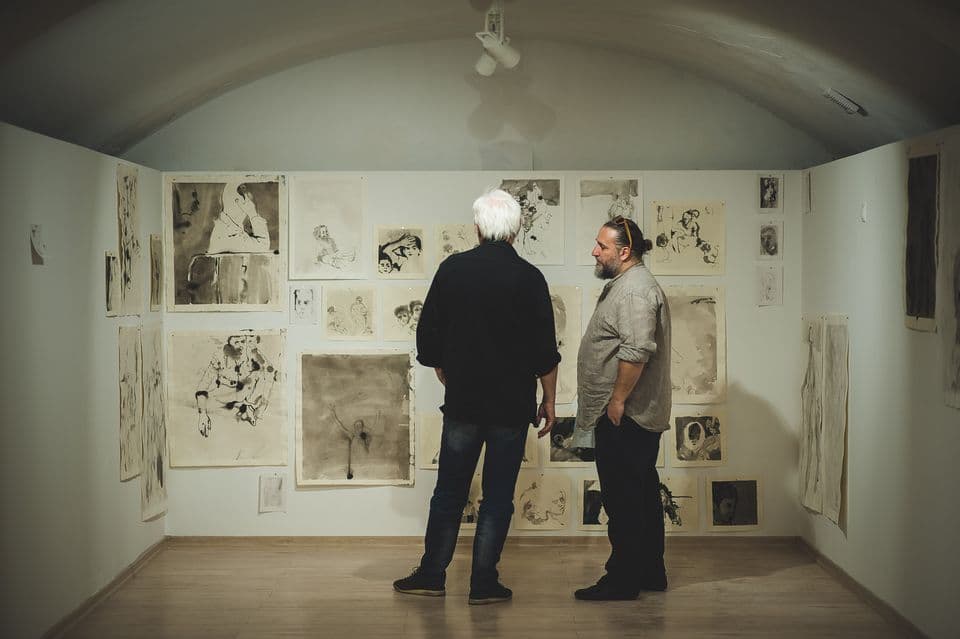
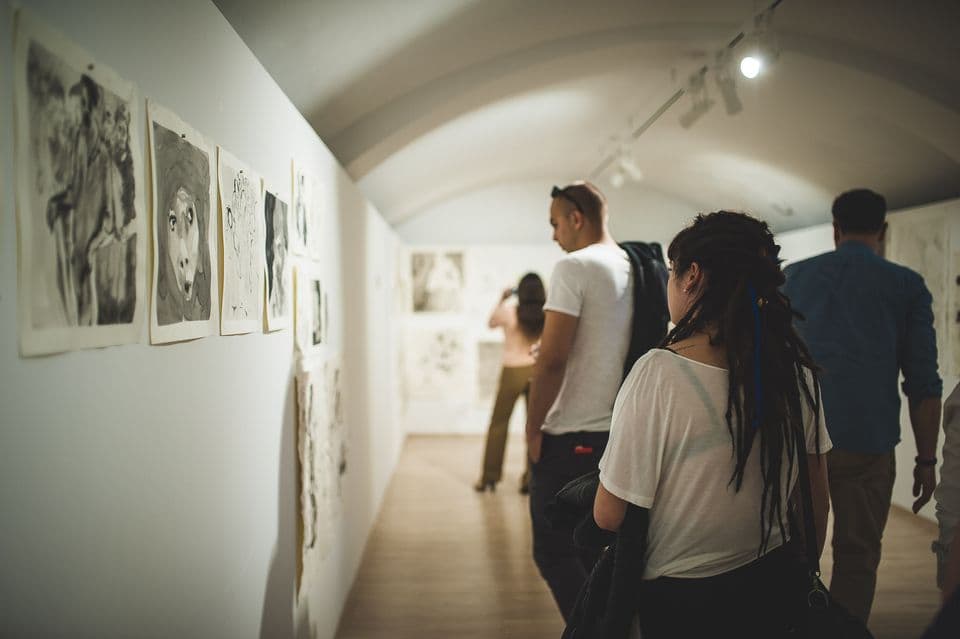
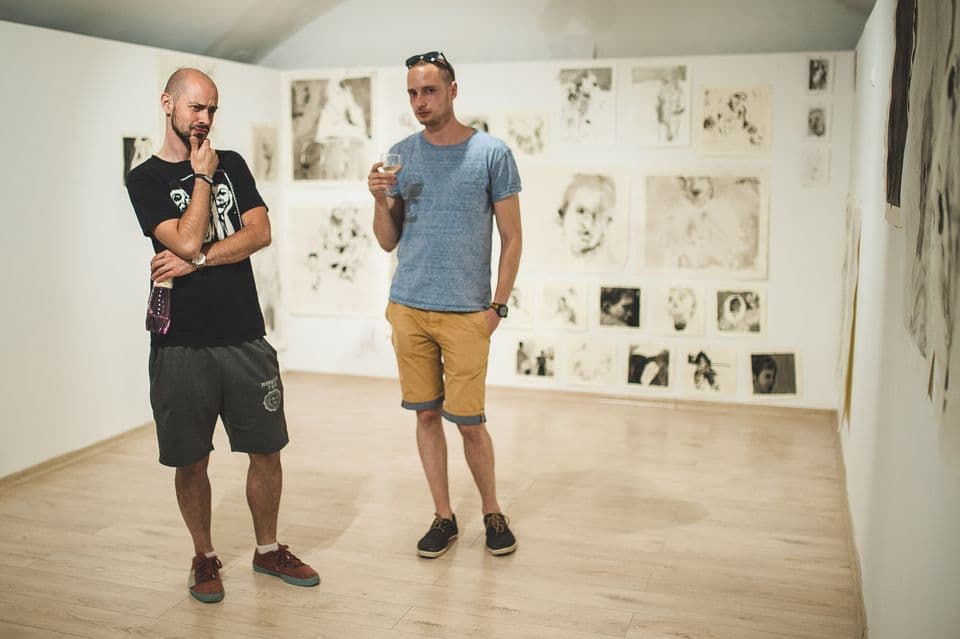
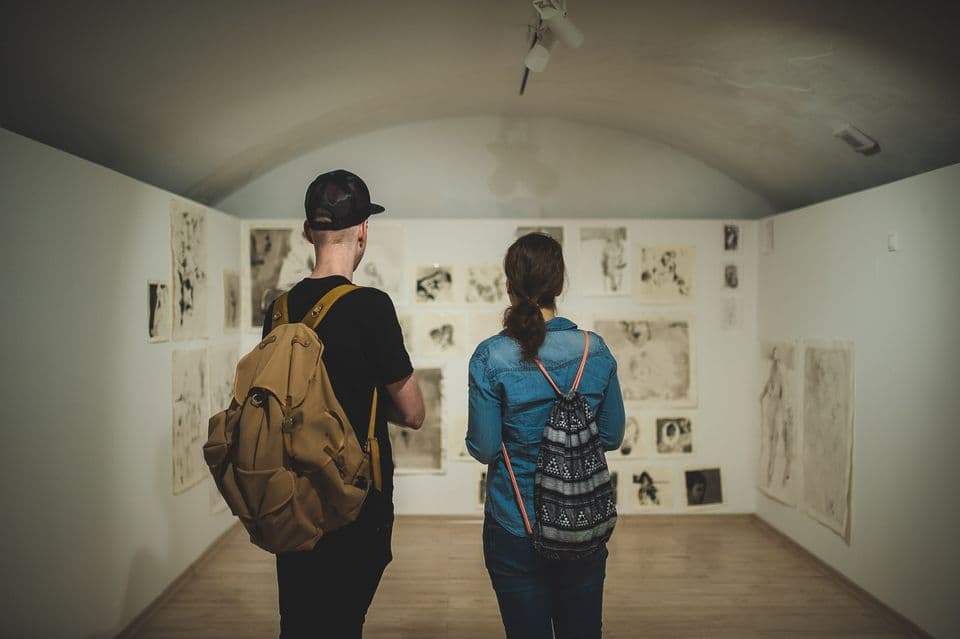
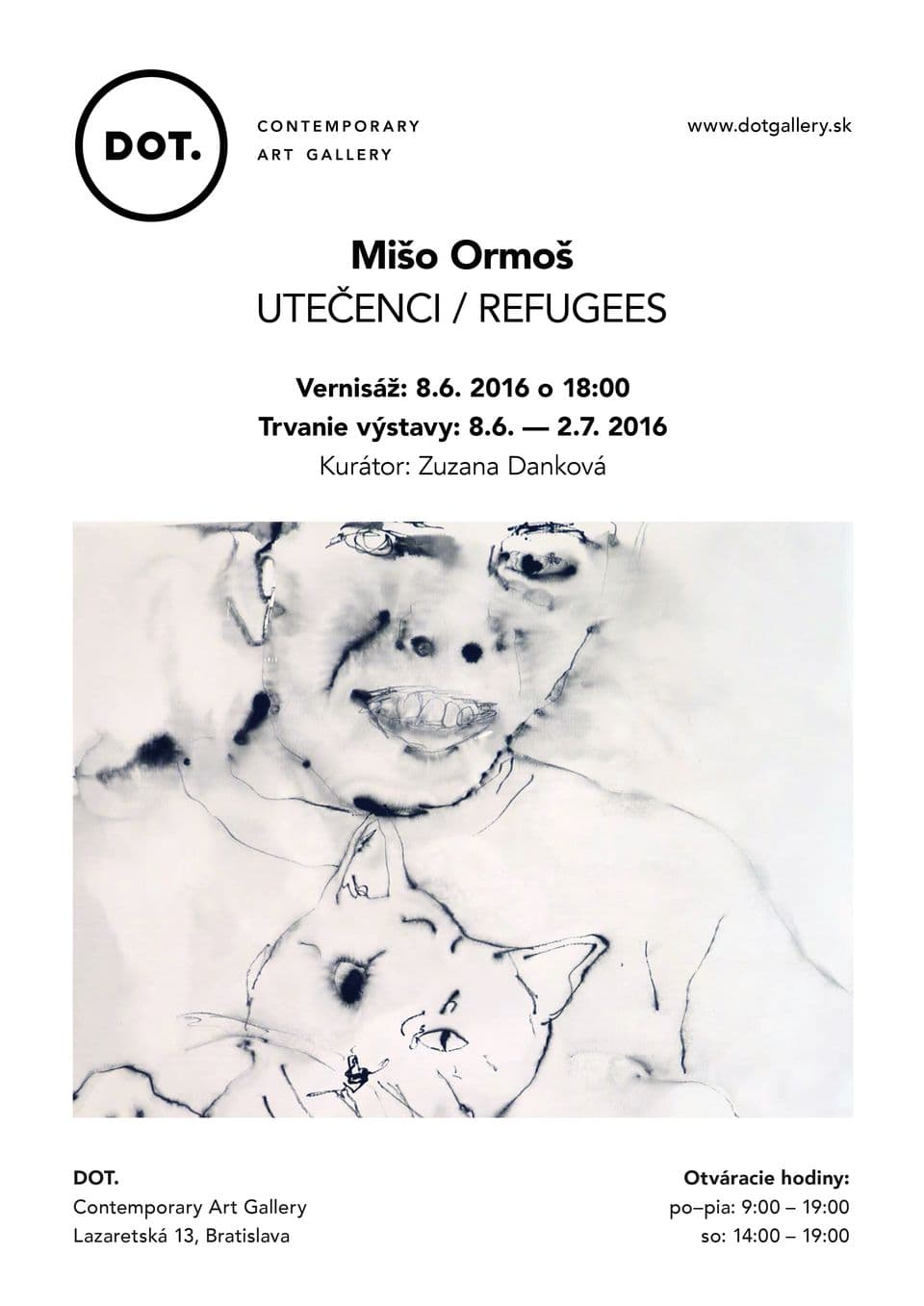
se centra en el individuo, hacia quien dirige su atención. Con este gesto sencillo pero eficaz señala la heterogeneidad de la masa: la multitud deja de ser anónima, uniforme e inasible; la forman retratos de individuos que, sin embargo, en la instalación sobre los muros de la galería pueden evocar de nuevo un conjunto indiferenciado y monótono. Las obras no deben entenderse como retratos personales de personas concretas, sino más bien como retratos de destinos y situaciones, que se comunican con nosotros en un lenguaje emocional propio – la visualidad artística.
Puesto que el tema de la migración tampoco es nuevo en nuestro contexto geográfico, histórico y artístico, sino que más bien ha regresado bajo una forma distinta y por otras causas y conflictos, su tratamiento estuvo precedido también por una investigación en la historia del arte eslovaco (por ejemplo, Majerník, Hložník, Špitz). Al igual que en relación con las obras de C. Majerník, las frases de Zsófia Kiss Szemán describirían con igual acierto los cuadros actuales de los Utečenci de Ormoš: “Las multitudes de personas expulsadas de sus hogares forman una corriente infinita, semejante a un amasijo de trapos sucios. Con las mochilas a la espalda, marchan a la fuerza hacia lo desconocido, hacia la incertidumbre.”
Los cuadros de Ormoš parecen a veces una situación tensa y otras, una espera. Unas veces el dibujo actúa como imagen de vacaciones; otras, como escena alegórica bíblica. Esta impresión no es casual y la produce precisamente lo inusual de retratar un tema existencial en combinación con una técnica no descriptiva de efecto gráfico y una síntesis expresiva (tinta, agua, grabado) de penetrante carga expresiva.
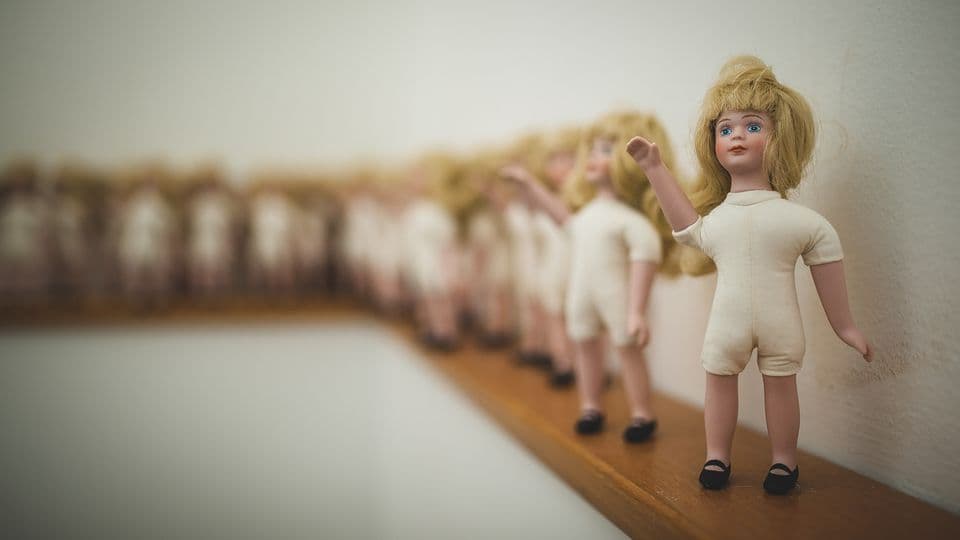
Los dibujos se complementan semánticamente con Inštalácia 88, multitud rítmica – síndrome de la UE idealizada: de un lado, personas aparentemente hermosas y sus saludos efusivos; del otro – un recibimiento con el saludo nazi, como gesto de odio.
Mišo Ormoš (de nombre Michal Ormandík, 1991, Bratislava) es un artista multidisciplinar; actualmente estudia en la Akadémia výtvarných umení v Prahe, en el Ateliér nových médií de Tomáš Svoboda.
Exposición apoyada con fondos públicos por el Fond na podporu umenia (fpu.sk)
---
eng
Mišo Ormoš - Refugees
Curator: Mgr. Zuzana Danková
Opening: 8th June 2016, 18:00
DOT. Lazaretská 13, Bratislava
Duration: 8th June – 2nd July 2016
Ormoš’s work heads directly into the themes of ephemerality, instability, finiteness altogether with existentialism. All of them are programmatically and repeatedly processed in the high number of author’s artefacts (e.g. Pope and Blues series).
In his current work (using his typically bleak black-and-white colours and a focus on a portrait and a figure), Ormoš reacts to actual situation in the world: the subject of refugees has been strikingly exposed and publicized since the end of the last year, variously interpreted and often presented in a deformed shape to Slovak readers and viewers. Under this flood of information, our author loses the receiving quality, beginning (as many others) to be apathetic and resistant towards the sensitive topic.
Ormoš notices our common tendency to sympathize with one kind of news, photographs or opinions without an analysis and evaluation of higher amount of various accessible pieces of information, both with a tendency for overgeneralization; our inability to focus an attention on details and concreteness.
Building on the basis of these observations, the author chooses a simple approach – in his art gesture, he works with a high amount of photographs picturing crowd scenes, where he highlights an individual, towards whom his attention is driven.
By this simplistic, but an effective gesture, Ormoš shows a heterogeneity of a mass: a crowd is no longer anonymous, uniform and incomprehensible; now it consists from portraits of individuals, though it might once again evoke a non-distinguished, homogeneous unit, when being installed on the walls of the gallery.
However, his works should not be perceived as personality portraits of particular people, but more as portraits of destinies and situations, communicating with us by their own emotional language – the art visualisation.
As a topic of migration is not that new in our geographic, historical and artistic context (it has just returned in a different shape and due to slightly different reasons and conflicts than those before), a research of the topic within the history of the Slovak art (e.g. Majerník, Hložník, Špitz) had been done before its artistic processing. Similarly as in their connection with the works of C.
Majerník, the sentences of Zsóffia Kiss Szemán could be used as a precise comment on the actual paintings of Ormoš’s Refugees (Utečenci): “The crowds of the people that have been cast out of their homes form an infinite flow, resembling a cluster of dirty rags. With the packs on their backs, they are forced to march towards unknown, towards uncertainty.”
Ormoš’s paintings once seem to depict tense situations, once a waiting. One time, a particular drawing acts as an image of the vacancy, other time as a biblical, allegorical scene. Such impression is not accidental; it is achieved by the unusualness of the way of portrait creation by combining an existential theme with non-descriptive, graphically-acting technique and a shorthand procedure (ink, water and engraving) with a vivid expressionistic quality.
The drawings are semantically coexisting with Installation 88 (Inštalácia 88) that depicts a rhythmic crowd – a syndrome of the idealised EU: on one side seemingly beautiful people and their fervent greetings, on the other one – greetings of hailing as a gesture of hatred.
Mišo Ormoš (own name Michal Ormandík, 1991, Bratislava) is multi-genre artist, currently studying on the Academy of Fine Arts in Prague in Tomáš Svoboda’s Atelier of New Media.
-
Supported using public funding by Slovak Arts Council
Galería