

Margaréta Petržalová
FAR FAR AWAY IS QUITE CLOSE
- Termín
- 4. 2. – 28. 2. 2022
- Místo
- Galerie DOT.
- Umělci
- Margaréta Petržalová
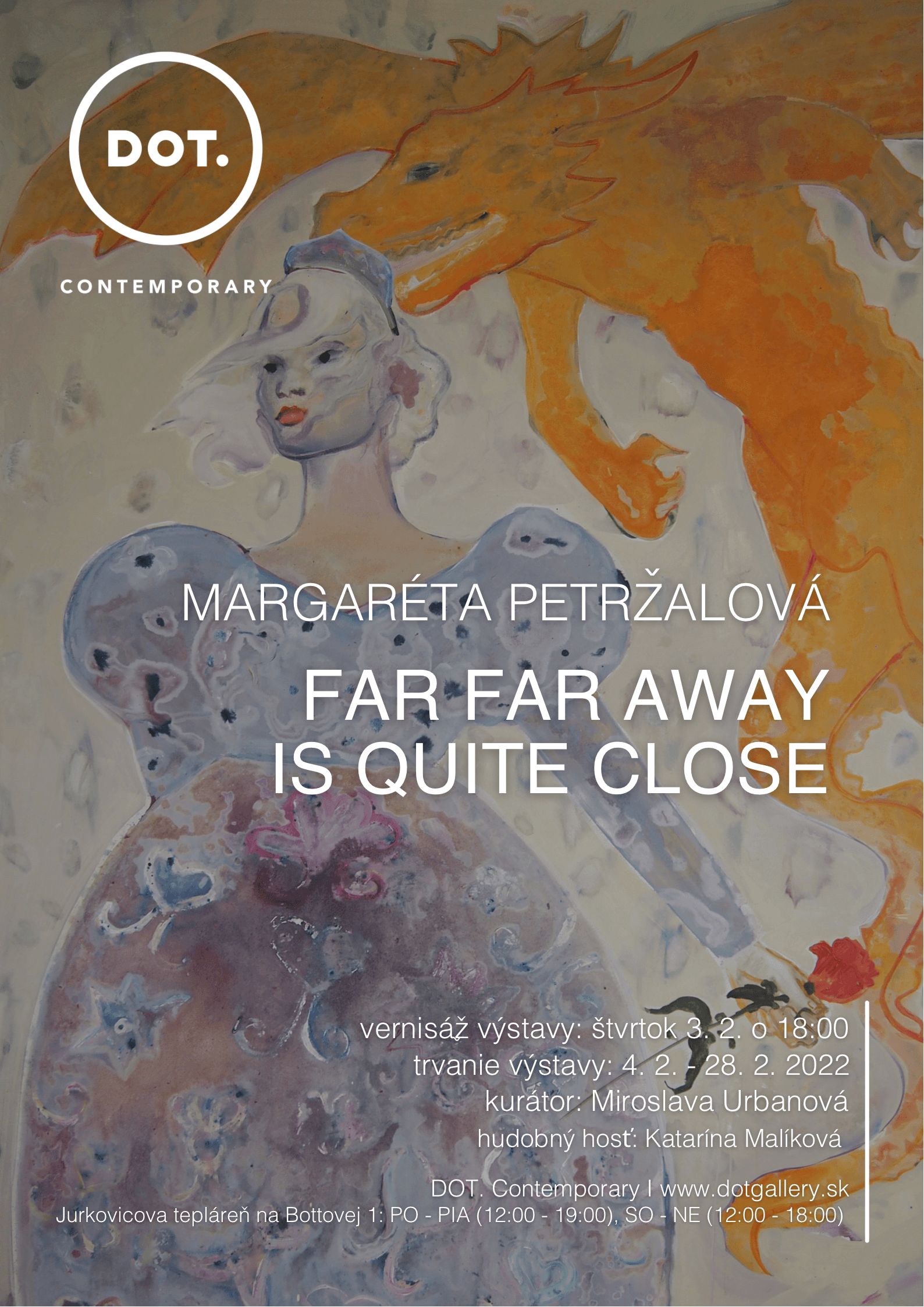
Margaréta Petržalová / Far far away is quite close
kurátorka výstavy: Miroslava Urbanová
vernisáž: 3. 2. 2022
trvání výstavy: 4. 2. - 28. 2. 2022
------
Jedním z prvních paralelních světů, který obsadil naše zákoutí ložnic a imaginace, je svět pohádek. Jeho notoricky známé úvodní věty a (převážně) šťastné konce se staly rajským plynem v krajině naší fantazie, který vybarvuje hrůzostrašná monstra, spanilé princezny a udatné rytíře vlastními barvami.
Narativní schémata a tradiční hodnoty pohádek se často staly nenápadným socializačním kompasem, který sublimoval do dalších oblastí našeho života. Jednou z oblastí, kterou pohltil notorický happy end, je mýtus romantické osudové lásky, dodnes živený různými popkulturními žánry. Lásky, u níž je nejzajímavější trnitá cesta plná překážek a její vrchol je vlastně koncem její iluze.
Margaréta Petržalová se nedávno vdala, zažila svůj pohádkový konec, který byl zároveň začátkem jejího přilnutí k žánru pohádek. Maluje je s vlastní živelnou energií a razancí. Scény a jejich postavy začala vykreslovat popisněji, nebo je jen jednoduše volně skicovat. Rozšafně je rozvětvuje ve fantazijních ornamentech, vpisuje detaily do struktury povrchů a materiálů.
Vše je navrženo na míru dané pohádce, a přece ji něčím míjí, popírá. Margarétu nezajímají vrcholné scény konkrétního literárního díla, jako autorka si vybírá především ženské postavy. V jejím provedení jsou hlavní hrdinky stále ještě okouzlivě krásné a zdánlivě dokonalé, zároveň však bezostyšně sebevědomé.
Jsou však skutečnou hlavní postavou vlastního příběhu, který mají ve svých rukou, nebo jen ozdobou vytrženou z původního příběhu? Margaréta jako malířka totiž vědomě koketuje s kýčem, který jí dovoluje vyjádřit nejen její překypující a bezostyšnou náklonnost k tématu, ale i k propracovaným šatům a drahým interiérům.
Šaty princezen jsou nadneseně vzdušné a namísto ukotvení postavy v určité době a sociální vrstvě odrážejí malířčiny schopnosti zprostředkovat specifickou atmosféru. Její perníkové domečky vypadají extra kořenité a narůstají do rozměrů, které pohlcují celou obrazovou plochu.
I ty nejklasičtější pohádky dostávají v současnosti nové šaty, které revidují některé jejich zakořeněné stereotypní pohledy a narativy. Stále však odhalují nadčasovou potřebu vyprávět příběhy postav, v nichž má šanci najít se co nejvíce lidí. Jaké vlastnosti by měli hrdinka či hrdina vašeho vlastního příběhu?
(Miroslava Urbanová)
-----
Margaréta Petržalová (*1993)
Absolvovala obor malířství na VŠVU pod vedením prof. Ivana Csudaie. Centrem dění v jejích obrazech je vždy člověk. Pracuje téměř vždy s živým modelem, jímž nahrazuje podsouvané autority, které neznáme. Během studia Petržalová pracovala s tématy týkajícími se její generace, v níž se pohybuje jak v reálné, tak ve virtuální podobě. V současnosti pracuje s autobiografickými motivy. Tyto obrazy vznikly přímo k výstavě, její chápání stereotypu jiné květinové ženy potlačuje její přirozenou agresivitu, tak příznačnou spíše pro muže, v květinách ženy mizí, zároveň v jejich jemnosti je jejich síla.
Katalog děl
One of the first of the parallel worlds that have occupied corners of our bedrooms and minds is the world of fairytales. In our fantasy landscape its opening sentences, familiar to all, and its (mostly) happy endings are like laughing gas: they lend colour to horrific monsters, lovely princesses and courageous knights, all in their proper hues. The narrative schemas and traditional values of fairytales often become, unobtrusively, a compass for socialisation, which is
sublimated in other areas of our life. One of the fields where the happy-end has notoriously swallowed everything whole is the myth of romantic destined love, kept alive to this day by various pop culture genres. Love, for which the thorny path full of obstacles is the most interesting one, and its summit is actually the end of its illusion.
Not long ago Margaréta Petržalová got married. She has experienced her fairytale ending, which was simultaneously the beginning of her attachment to fairytales as a genre. She
paints them with her own elemental energy and vigour.
Margaréta had begun to draw scenes and their figures more descriptively, or just simply to sketch them freely. Extravagantly she ramifies them in fantastical ornaments, inscribing details in the structure of surfaces and materials. Everything is designed to the measure of the given fairytale, and nevertheless in some way changes and denies it. Margaréta is not interested in climactic scenes from a specific literary work; in her art she principally chooses female figures.
As she presents them, the heroine is still always enchantingly beautiful and apparently perfect, but at the same time brazenly self-confident. Is she, however, truly the main character in her own story, which she holds in her own hands, or is she merely a decorative feature torn from the original story? In full awareness Margaréta coquettes with kitsch, which permits her to express her exuberant and bold affinity not only with the theme but also with elaborate clothing and
luxurious interiors. The princesses’ clothes are grandly airy, and instead of anchoring the character in a definite time and social layer, they reflect the painter’s gifts for conveying a
specific atmosphere. Her gingerbread cottages look extra spicy and grow to dimensions that swallow the entire pictorial surface.
Even the most classic fairytales are currently being clothed in new garments, which revise certain of their rooted stereotypical viewpoints and narratives. Still, however, they disclose the timeless need to tell the stories of those characters in whom the greatest number of people have a chance to find themselves. What qualities would she have or he, the heroine or hero of your story?
-----
Margaréta Petržalová (*1993)
Graduated in the discipline of painting at the Academy of Fine Arts and Design (VŠVU), under the guidance of Prof. Ivan Csudai. The centre of activity in her paintings is always the human being. She works almost exclusively with a live model, with whom she replaces authorities thrust upon us, whom we do not know.
During her studies Petržalová worked with themes affecting her generation, within which she moves in both real and virtual forms. Currently she is working with autobiographical motifs. These paintings were produced directly for the exhibition.
Her conception of the stereotype of a different flower-woman suppresses her natural aggression, so typical rather of men; in flowers women vanish, while at the same time, in their delicacy is their strength.